
Blog
Choosing PVC Keder: Dimensional Tolerance, Weld Compatibility, Durability
PVC Keder Selection Guide: Dimensional Tolerance, Weld Compatibility, and Field Durability
In commercial vehicle tarpaulin systems, a component that may seem minor can ultimately determine the performance of the entire system. The PVC keder is exactly such a component. When selected incorrectly, it can trigger a chain of issues—difficult installation, rippling or waviness, edge separation, wind noise, and even tarpaulin tearing. When selected correctly, installation becomes faster, the finish looks cleaner, and service life in real-world conditions increases significantly.
In this article, we address PVC keder selection under three core headings: dimensional tolerance, weld compatibility, and field durability. Our goal is not to focus on theoretical definitions, but to clarify practical, field-proven criteria.
What Is a PVC Keder, and What Does It Do in a Tarpaulin System?
Where Is It Used?
PVC keder is particularly well-suited to applications where the edge connection must be both fast and repeatable.
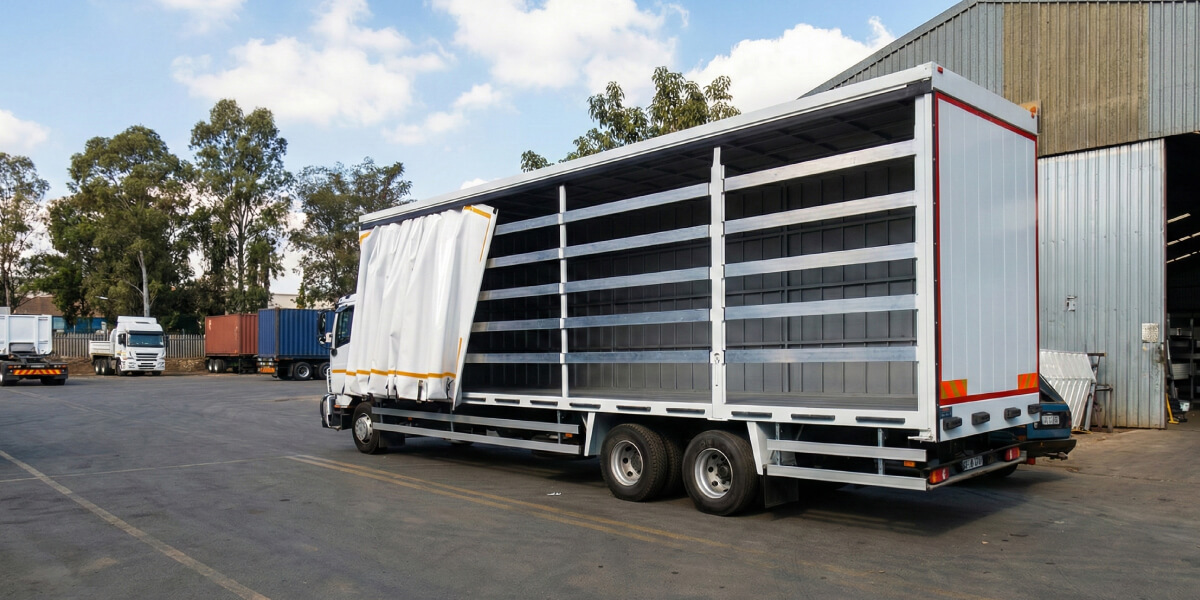
Commercial Vehicle Tarpaulins
It is widely used for edge retention on tarpaulins for tractor-trailers, trucks, trailers, and semi-trailers, primarily because it simplifies installation and makes maintenance/service operations more practical.
Project-Specific Custom Applications
When dimensional and profile requirements fall outside standard ranges, the keder profile must be selected based on the channel geometry—and in some projects, it may need to be manufactured with custom tolerances.
Three Critical Criteria for Selecting PVC Keder
Selecting a PVC keder is not simply a matter of “thicker vs. thinner.” The three topics below form the backbone of reliable field performance.
Dimensional Tolerance: Installation Speed and Visual Quality Start Here
Dimensional tolerance means the keder maintains the same geometry meter after meter. Inconsistent dimensions can cause it to fit too tightly in one section—making installation difficult—while remaining too loose in another, increasing the risk of pull-out.
Bead Diameter and Channel Compatibility
The bead diameter must match the channel’s internal diameter and the shape of the channel mouth.
If the channel is tight, installation labor increases.
If the channel is loose, the likelihood of gradual pull-out increases over time.
On long runs, even small bead diameter variations can translate into waviness and uneven tension across the entire edge.
Base Width and Stable Bonding to the Tarpaulin Edge
If the base is too narrow, the welding/sewing area becomes limited and edge wear accelerates. An excessively wide base, on the other hand, may curl in some applications—negatively impacting aesthetics and sealing performance.
Why Does Production Repeatability Matter?
When dimensions change between the second and third order on the same project, you end up with “the same system behaving differently” in the field. This increases service cost and delivery risk. In other words, tolerance is not merely a technical detail—it is directly tied to lead-time reliability and operational control.
Weld Compatibility: The Keder Must Behave as a “Single Piece” with the Tarpaulin
PVC keder performance is largely determined at the interface where it is bonded to the tarpaulin. Two primary risks exist here: low bond/weld strength and process instability.
Compatibility Between Welding Method and Material
The keder compound and base surface must be compatible with the joining method used. Common scenarios include:
Hot-air welding: requires correct heating, with balanced pressure and line speed.
HF (high-frequency) welding: dielectric properties of the material and base behavior become critical.
Solvent-based bonding or hybrid processes: surface preparation and dwell times become decisive.
What Happens If Process Parameters Are Not Stable?
The same keder can weld very well on one line but perform weakly on another. Often, this is not because the keder is “bad,” but because the process window is too narrow. During selection, the keder should be tested to confirm it remains stable across a sufficiently wide operating range within your production process.
A Practical, Fast Test Approach
Inspect the weld line on a cut sample: if the surface appears “attached” but there is internal separation, the risk is high.
Compare batches with simple peel/tensile tests.
Repeat the same tests at lower temperatures (winter-condition simulation).
Field Durability: The Reality of UV, Cold, Chemicals, and Abrasion
Field durability is shaped more by the usage scenario than by catalog values. PVC keder may be exposed to wind-induced vibration, abrasion, sunlight, oil, diesel vapor, and cleaning chemicals.
UV and Climate Exposure
Profiles with weak UV resistance can harden and crack. Once hardening begins, the way the keder behaves inside the channel changes: installation/removal becomes more difficult and edge wear increases.
Flexibility in Cold Weather
When PVC stiffens in cold conditions, brittleness under sudden impact and tension may increase. For fleets operating through winter conditions, cold-weather behavior must be evaluated explicitly.
Abrasion and Vibration
In scenarios where the keder undergoes continuous micro-movement inside the channel, friction wear and dusting can occur. Over time, this can develop into loosening and noise issues. Surface finish and hardness balance are key determinants here.
How Should You Choose the Right Keder Type and Profile?
A good selection is not made based on one dimension alone; it must consider the entire system: the channel, the tarpaulin, the joining method, and operating conditions.
1) Evaluate Bead Diameter Together with the Channel
Channel internal dimensions, channel mouth geometry, and installation method (pull-in vs. push-in) should be evaluated as a set. The same bead diameter can behave very differently depending on channel design.
2) Choose Base Design and Surface According to Your Process
If you know your welding/bonding line’s operating window, selecting the keder base accordingly is the right approach. The “it works in all conditions” assumption typically leads to costly field returns.
3) Define the Usage Scenario Clearly
Long-haul operation, intense sun exposure, chemical contact, and winter usage directly influence profile selection. A standard profile is rational for standard applications; project-specific lines typically require a project-specific tolerance approach.
What Information Is Needed for Project-Based Requirements?
Channel dimensions and cross-section geometry
Tarpaulin weight (gsm) and surface type
Welding method and allowable machine parameter range
Operating climate (hot/cold) and usage intensity
Once these inputs are clear, the correct profile selection becomes significantly faster.
Where Is It Used?
PVC keder is particularly well-suited to applications where the edge connection must be fast and repeatable.
Commercial Vehicle Tarpaulins
It is frequently preferred for edge retention on tarpaulins used on tractor units, trucks, trailers, and semi-trailers, because it improves practicality during installation and maintenance/service operations.
Project-Specific Custom Applications
When dimensional and profile requirements are non-standard, the keder profile should be selected according to the channel/track geometry—and in some projects, it may need to be produced with custom tolerances.
Three Critical Criteria in PVC Keder Selection
Choosing a PVC keder is not simply a “thicker vs. thinner” decision. The three criteria below form the backbone of reliable field performance.
Dimensional Tolerance: Installation Speed and Visual Quality Start Here
Dimensional tolerance means the keder maintains consistent geometry along every meter. Inconsistent dimensions may cause a very tight fit in one section (making installation difficult) while remaining loose in another (increasing the risk of pull-out).
Bead Diameter and Channel Compatibility
The bead diameter must match the channel’s internal dimensions and the shape of the channel mouth.
If the channel is tight, installation labor increases.
If the channel is loose, the likelihood of pull-out rises over time.
On long runs, even minor bead diameter variation can translate into waviness and uneven tension across the edge.
Base Width and Stable Bonding to the Tarpaulin Edge
If the base is too narrow, the welding/sewing area becomes limited and edge wear accelerates. An excessively wide base, on the other hand, may curl in certain applications—negatively impacting aesthetics and sealing performance.
Why Production Repeatability Matters
If dimensions change between the 2nd and 3rd order within the same project, you end up with “the same system behaving differently” in the field. This increases service cost and delivery risk. Therefore, tolerance is not merely a technical detail—it is directly tied to lead-time reliability and operational control.
Weld Compatibility: The Keder Must Behave as a “Single Piece” with the Tarpaulin
PVC keder performance is largely determined at the interface where it is joined to the tarpaulin. Two primary risks exist here: low bond/weld strength and process instability.
Compatibility Between Joining Method and Material
The keder compound and base surface must be compatible with the joining method in use. The most common scenarios include:
Hot-air welding: requires correct heating, with balanced pressure and line speed.
HF (high-frequency) welding: dielectric properties of the material and base behavior become critical.
Solvent-based bonding or hybrid processes: surface preparation and dwell times become decisive.
What If Process Parameters Are Not Stable?
The same keder can weld very well on one line but perform weakly on another. Often, this is not because the keder is “bad,” but because the process window is too narrow. During selection, you should test whether the keder remains stable across a sufficiently wide operating range in your process.
A Practical, Fast Test Approach
Inspect the weld line on a cut sample: if the surface looks “attached” but internal separation occurs, the risk is high.
Compare batches using simple peel/tensile tests.
Repeat the same tests at lower temperatures (winter-condition simulation).
Field Durability: The Reality of UV, Cold, Chemicals, and Abrasion
Field durability is shaped more by the usage scenario than by catalog values. PVC keder may be exposed to wind-induced vibration, abrasion, sunlight, oil, diesel vapor, and cleaning chemicals.
UV and Climate Exposure
Profiles with weak UV resistance may harden and crack. Once hardening starts, keder behavior inside the channel changes: installation/removal becomes more difficult and edge wear increases.
Flexibility in Cold Weather
When PVC stiffens under cold conditions, brittleness under sudden impact and tension may increase. For fleets operating in winter conditions, cold-weather behavior must be evaluated explicitly.
Abrasion and Vibration
In scenarios where the keder undergoes continuous micro-movement inside the channel, friction wear and dusting can occur. Over time, this can develop into loosening and noise issues. Surface finish and hardness balance are key determinants here.
How Should You Select the Right Keder Type and Profile?
A robust selection is not made based on one dimension alone; it must consider the entire system: the channel, the tarpaulin, the joining method, and operating conditions.
1) Evaluate Bead Diameter Together with the Channel
Channel internal dimensions, channel mouth geometry, and installation method (pull-in vs. push-in) should be evaluated as a set. The same bead diameter can behave very differently depending on the channel design.
2) Choose Base Design and Surface According to Your Process
If you know the operating window of your welding/bonding line, selecting the keder base accordingly is the correct approach. The “it works in all conditions” assumption typically leads to costly field returns.
3) Define the Usage Scenario Clearly
Long-haul operation, intense sun exposure, chemical contact, and winter usage directly influence profile selection. A standard profile is rational for standard applications; project-specific lines typically require a project-specific tolerance approach.
What Information Is Needed for Project-Based Requirements?
Channel dimensions and cross-section geometry
Tarpaulin weight (gsm) and surface type
Joining method and allowable machine parameter range
Operating climate (hot/cold) and usage intensity
Once these inputs are clear, the correct profile selection becomes significantly faster.
Complementary Products
To provide a more comprehensive solution for your application, you can find the related components used with this product here. The right combination ensures a more secure installation and longer service life.